WelkomNL Blog
How to Get Your BSN Number in the Netherlands: 2026 Complete Guide
Everything you need to know about getting your BSN (Burgerservicenummer) in the Netherlands — who needs it, how to apply, what documents are required, and common mistakes to avoid.
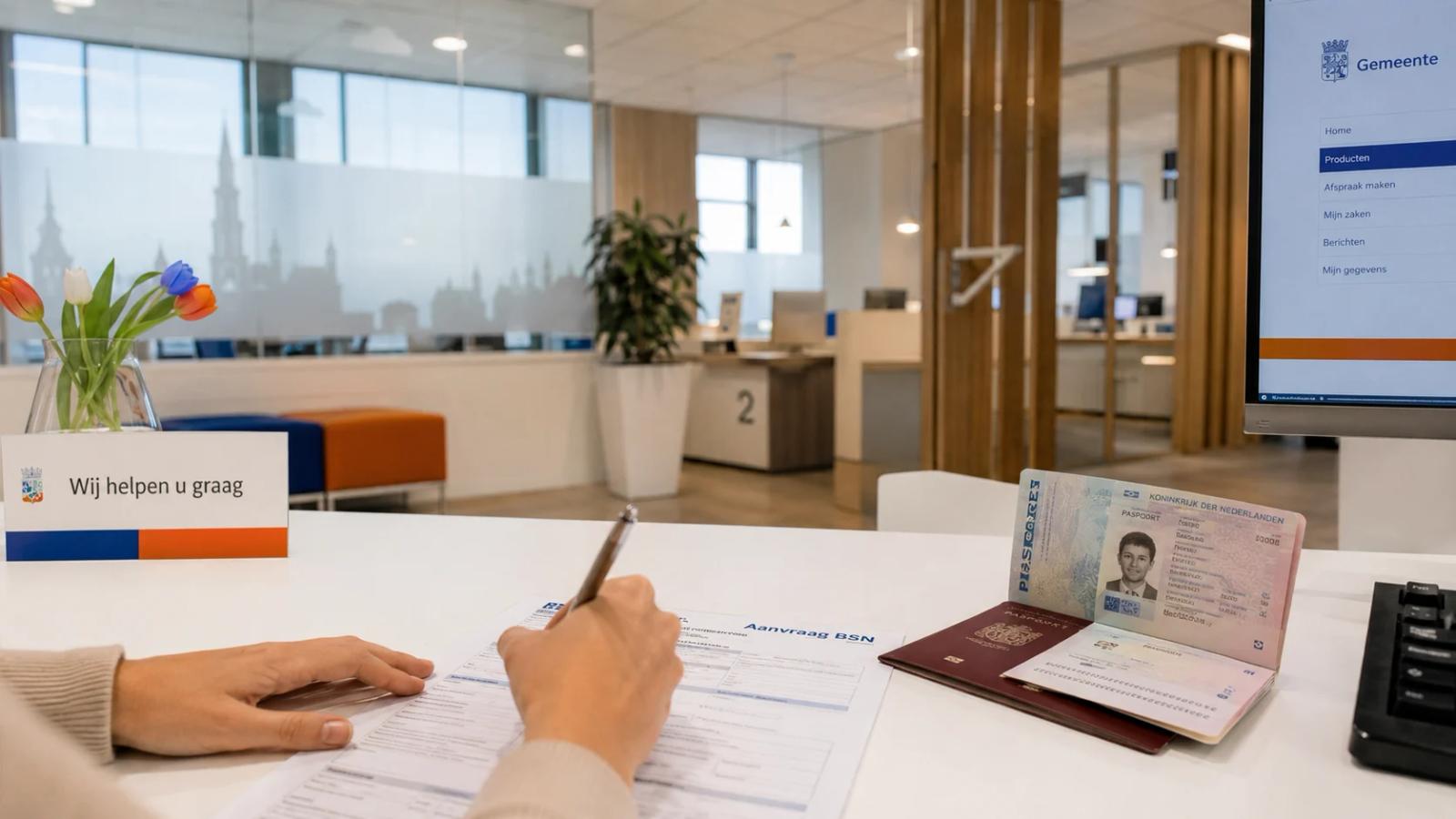
If you are moving to the Netherlands — whether for work, study, or family — one of the very first things you will hear about is the BSN, short for Burgerservicenummer, or Citizen Service Number. Without it, you cannot open a Dutch bank account, sign an employment contract, access healthcare, or arrange housing. It is the single most important administrative step for every newcomer.
This guide explains exactly what the BSN is, who needs one, how to get it, and what to watch out for in 2026.
What Is a BSN Number?
The BSN is a unique nine-digit personal identification number issued by the Dutch government. Every person registered as a resident in the Netherlands receives one. It works like a national ID in the administrative sense — it links you to all Dutch government systems, your employer, your insurer, and your bank.
The BSN is not something you choose or create. It is assigned automatically when you register your address with a Dutch municipality or an RNI registration point.
Who Needs a BSN?
Almost everyone who lives or works in the Netherlands needs a BSN. This includes:
- EU/EEA citizens moving to the Netherlands for work or study
- Non-EU nationals with a residence permit or highly skilled migrant status
- International students enrolled at Dutch universities
- Seasonal workers and short-term employees
- Family members joining a registered resident
Even if you are only in the Netherlands temporarily but earning income or using Dutch public services, a BSN is required.
Two Ways to Get a BSN
Option 1: Register at Your Municipality (BRP) — For Stays of 4 Months or More
If you plan to live in the Netherlands for more than four months, you must register in the Basisregistratie Personen (BRP), the national personal records database. This is done at your local gemeente (municipality office).
To make an appointment you visit your municipality's website. In Amsterdam, Rotterdam, and other major cities, appointment slots are often booked out weeks or even months in advance, so you should book as soon as you have a confirmed Dutch address.
You are legally required to register within five days of moving into your Dutch address. Missing this window can result in a fine of up to €325, so do not delay.
Option 2: Register at an RNI Location — For Stays Under 4 Months
If you are staying for less than four months but still need a BSN — for example, to receive a Dutch salary — you register at one of the nineteen designated Registratie Niet-Ingezetenen (RNI) locations. These are special counters at select municipalities like Amsterdam, Rotterdam, Eindhoven, and The Hague.
RNI registrations require an appointment too. This gives you a BSN without registering a permanent address, which is useful for short-term workers and seasonal migrants.
Documents You Need to Bring
The exact documents vary slightly by municipality, but for most first-time registrations you will need:
- Valid passport or EU/EEA identity card
- Proof of address in the Netherlands — a rental contract, purchase deed, or a written declaration from your landlord
- Original birth certificate (apostilled or legalised if from outside the EU)
- Marriage certificate, if applicable, also apostilled
- Residence permit or visa documentation for non-EU/EEA nationals
- Employment contract or student enrolment letter (useful context, not always mandatory)
Bring originals, not copies. Some municipalities will only accept certified translations for documents in non-Latin scripts.
What Happens at the Appointment
At the appointment, a municipal civil servant will verify your documents and enter your details into the BRP system. For most people the appointment takes around twenty to thirty minutes. You may receive your BSN on the same day if you are registering through an International Newcomers Centre, or by post within five to ten working days for a standard municipality registration.
Once you have your BSN, you can immediately begin using it. You do not need to wait for a physical card — the number is valid as soon as it is issued.
How Long Do You Wait for an Appointment?
Waiting times depend heavily on the city. In 2026, Amsterdam typically has a wait of six to eight weeks for a first registration appointment. Rotterdam is faster, usually two to three weeks. Smaller municipalities often have appointments available within days.
If you are a highly skilled migrant or a knowledge worker, your employer's relocation team or the IND may be able to expedite the process through a dedicated newcomers desk.
What You Use Your BSN For
Once registered, your BSN unlocks access to most Dutch public and private services:
- Opening a Dutch bank account (ING, ABN AMRO, Rabobank, bunq)
- Registering with a GP (huisarts) and getting health insurance
- Signing employment contracts and receiving your salary
- Applying for DigiD — your online government identity
- Filing income tax and claiming allowances (toeslagen)
- Enrolling children in school
- Accessing government portals like MijnOverheid and DUO
Common Mistakes to Avoid
The most common mistake newcomers make is delaying registration because they are still arranging housing. Try to book your appointment even before you arrive if you already have a confirmed Dutch address. If you are living with a friend or family member temporarily, ask them to sign a written address declaration (verklaring van inwoning) so you can register as soon as possible.
Another frequent issue is arriving at the appointment without the original documents. Photocopies or scanned PDFs are not accepted. Make sure your birth certificate has the correct legalisation for the country it was issued in.
The BSN is your gateway to life in the Netherlands. Getting it early saves weeks of frustration with every service that follows.
Stay Organised With WelkomNL
The WelkomNL app helps you track every step of your integration journey, including your BSN registration, DigiD setup, and health insurance deadline. With built-in reminders, personalised timelines, and an AI assistant that answers your questions in your language, WelkomNL is designed specifically for internationals arriving in the Netherlands. Download it on the App Store or Google Play to get started.
Next step
Put this guidance into action inside the WelkomNL app
Keep your momentum going with the WelkomNL app and move from reading advice to taking practical action in one place.
The app is built to help newcomers in the Netherlands navigate jobs, local systems, and day-to-day next steps with more clarity.
Continue reading
Related articles
Bringing or Buying a Car in the Netherlands: Registration and Tax Guide 2026
Understand how to register a car in the Netherlands in 2026, including RDW registration, BPM, road tax rates for petrol, hybrid and electric cars, and insurance.
Setting Up Utilities in the Netherlands: Energy, Water and Internet in 2026
Set up gas, electricity, water and internet in your new Dutch home. Compare fixed and variable energy contracts, meter readings, providers and moving-in timing for 2026.

Parental Leave and Child Benefits in the Netherlands: 2026 Guide for Families
Understand Dutch maternity, partner and parental leave rules for 2026, how UWV payments work, and how kinderbijslag child benefit is calculated and paid.