
WelkomNL Blog
Bringing or Buying a Car in the Netherlands: Registration and Tax Guide 2026
Understand how to register a car in the Netherlands in 2026, including RDW registration, BPM, road tax rates for petrol, hybrid and electric cars, and insurance.
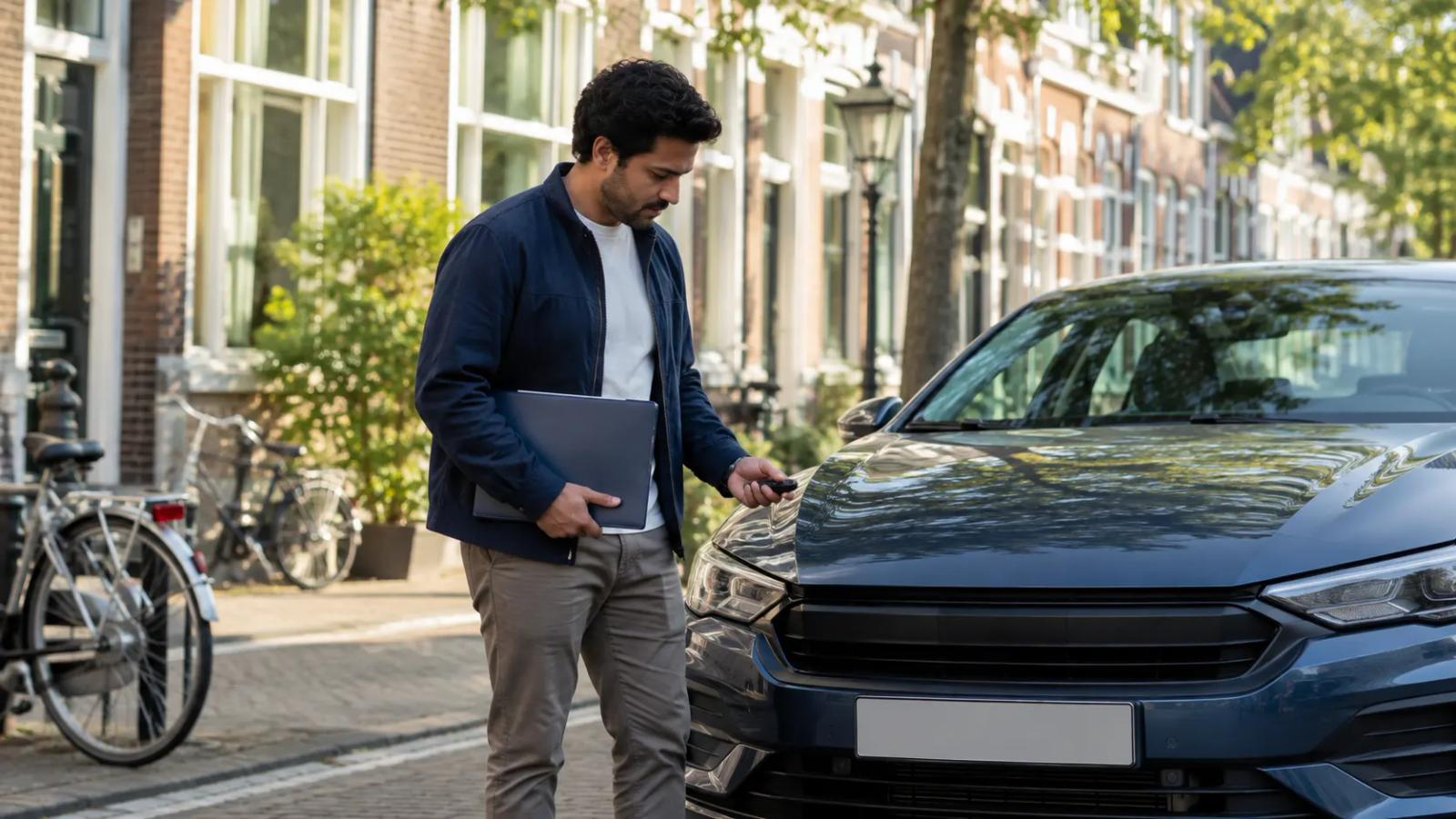
Whether you are bringing your own car from abroad or buying a first car in the Netherlands, the process runs through the same vehicle authority, RDW, and the same tax framework. The rules differ meaningfully depending on whether you are relocating with a vehicle you already own or purchasing one locally, so it is worth understanding both routes before you commit.
The Three-Month Rule for Foreign-Registered Cars
A foreign-registered car can generally be driven in the Netherlands for up to three months from the date you arrive with it. After that window, the vehicle normally needs to be registered with the Dutch authorities and carry a Dutch number plate, so treat this as a hard planning deadline rather than a soft guideline.
Relocating With Your Own Car
If you are moving your main residence to the Netherlands and bring a car you already own and have used, you may be eligible for an exemption from BPM, the Dutch private vehicle tax, provided you meet the relocation conditions and file the required declaration on time. This exemption is specifically for someone genuinely relocating their residence, not for a car purchased shortly before or after the move purely to avoid tax, so keep evidence of your prior ownership and usage.
Even with a BPM exemption, you still register the vehicle with RDW, and it must pass any applicable technical requirements before receiving a Dutch plate.
Buying or Importing a Car Without the Relocation Exemption
If the relocation exemption does not apply, importing or newly registering a passenger car generally triggers BPM, calculated primarily from the vehicle’s CO2 value as shown on its Certificate of Conformity, using the rates in force on the actual registration date rather than the date you agreed to buy the car. Because rates and CO2 bands can shift from year to year, get a current calculation before finalising a purchase price rather than relying on an old online estimate.
Vehicles older than thirty years are generally fully exempt from BPM, which is one reason classic-car imports follow a different cost logic from ordinary used-car imports.
Registering With RDW: Step by Step
- Gather the vehicle’s registration documents, Certificate of Conformity or equivalent technical documentation, and proof of ownership.
- Confirm whether your situation qualifies for the relocation BPM exemption or whether BPM is payable.
- Book and complete any required vehicle inspection.
- Submit the registration through RDW, either directly or via an authorised garage or import specialist.
- Pay any BPM due and receive your Dutch registration and number plate.
- Arrange Dutch car insurance before driving on the new plate, since insurance is compulsory from the moment the vehicle is used on public roads.
Road Tax (Motorrijtuigenbelasting) in 2026
Dutch road tax is charged mainly on the vehicle’s unladen weight and fuel type rather than on emissions or horsepower directly, and the exact amount also depends on the province where you are registered. For 2026, fully electric vehicles pay 70% of the equivalent petrol rate, continuing a phased reduction of their historical discount; the discount is scheduled to fall further before disappearing entirely by 2030.
A significant change for 2026 affects plug-in hybrids: PHEVs lose their road tax discount entirely from 1 January 2026 and now pay the same rate as comparable petrol vehicles, a detail that can meaningfully change the ongoing cost of owning a plug-in hybrid compared with previous years.
Company Cars: A Separate Set of Rules
If a car is provided by an employer for private use, a different tax addition, or bijtelling, applies to your income tax rather than road tax alone. The previously reduced addition rate for fully electric company cars is being aligned with the standard rate over time, so confirm the current percentage with your employer’s payroll or a tax adviser before assuming an older electric-vehicle benefit still applies unchanged.
Insurance Basics
- WA (aansprakelijkheidsverzekering): the legally required minimum, covering damage you cause to others.
- WA + beperkt casco: adds limited own-damage cover, such as theft, fire or storm damage.
- All-risk (allrisk): the broadest cover, including most damage to your own vehicle.
Compare no-claims history transfer rules if you are bringing driving experience from abroad; some Dutch insurers accept a foreign no-claims record with supporting evidence, which can meaningfully reduce your premium.
Before You Finalise Any Purchase
- Get a current BPM and road-tax estimate for the exact vehicle, not a similar model.
- Confirm technical inspection requirements for imported vehicles before assuming a foreign roadworthy certificate transfers directly.
- Check whether your Dutch driving licence situation is settled, since licence and vehicle registration are separate processes.
- Budget for registration fees, inspection costs and insurance activation alongside the purchase price itself.
Confirm the exemption, the tax band and the registration date before you agree a price—not after the car is already on a Dutch driveway.
Official Sources and Further Reading
RDW: Moving to the Netherlands and bringing your vehicle
Business.gov.nl: Private vehicle and motorcycle tax (BPM)
Keep Your Move Organised With WelkomNL
WelkomNL helps you track registration, licence, insurance and other settling-in tasks in one clear checklist, while RDW, the Tax Administration and your insurer handle the official decisions.
Next step
Put this guidance into action inside the WelkomNL app
Keep your momentum going with the WelkomNL app and move from reading advice to taking practical action in one place.
The app is built to help newcomers in the Netherlands navigate jobs, local systems, and day-to-day next steps with more clarity.
Continue reading
Related articles

Setting Up Utilities in the Netherlands: Energy, Water and Internet in 2026
Set up gas, electricity, water and internet in your new Dutch home. Compare fixed and variable energy contracts, meter readings, providers and moving-in timing for 2026.

Parental Leave and Child Benefits in the Netherlands: 2026 Guide for Families
Understand Dutch maternity, partner and parental leave rules for 2026, how UWV payments work, and how kinderbijslag child benefit is calculated and paid.

Finding and Registering With a GP (Huisarts) in the Netherlands: 2026 Guide
Learn how the Dutch huisarts system works, how to find and register with a GP near you, what to bring, and when to use the GP versus urgent or emergency care.