WelkomNL Blog
Netherlands Relocation Checklist
Moving to the Netherlands? Use this practical newcomer checklist to prepare your documents, register correctly, get your BSN, and settle faster.

Moving to a new country is exciting, but it can also feel like a long list of forms, deadlines, and decisions. If you are looking for a clear moving to the Netherlands checklist, the good news is that the process becomes much easier once you break it into stages.
This guide walks you through what to arrange before you leave, in your first days after arrival, and during your first weeks in the Netherlands. It is written for workers, students, families, and other internationals who want a practical start without unnecessary confusion.
If you want one place to keep these steps organized, WelkomNL was built for exactly this moment: bringing together multilingual guidance, articles, job help, CV support, and practical settlement tools in one app.
Before you leave: prepare the essentials

The easiest way to reduce stress after arrival is to prepare the most important documents and decisions before you travel.
Start with your residence and work status. According to NetherlandsWorldwide, what you need depends on your nationality, the reason for your move, and how long you will stay. If you are an EU, EEA, or Swiss citizen, the process is usually simpler. If you are moving from outside the EU, you may need a visa, residence permit, or employer-sponsored process before you arrive.
You should also confirm whether your foreign qualifications need to be recognized or evaluated before you can work in your field. This matters especially for regulated professions and specialized roles.
Your pre-departure checklist
- Check whether you need a visa or residence permit.
- Confirm whether you are legally allowed to work in the Netherlands.
- Make sure your passport or ID will stay valid long enough for your move and immigration process.
- Gather original civil documents such as your birth certificate, marriage certificate, and children's birth certificates if relevant.
- Check whether documents need legalization, apostille, or official translation.
- Save digital copies of everything in a secure folder.
- Research your destination municipality and whether you need an appointment for registration.
- If you already have a job, review your contract carefully before departure.
One of the biggest mistakes newcomers make is assuming they can "figure out the paperwork later." In reality, small missing documents can delay bigger steps such as registration, BSN issuance, banking, or employer onboarding.
Your first days in the Netherlands: register and get your BSN
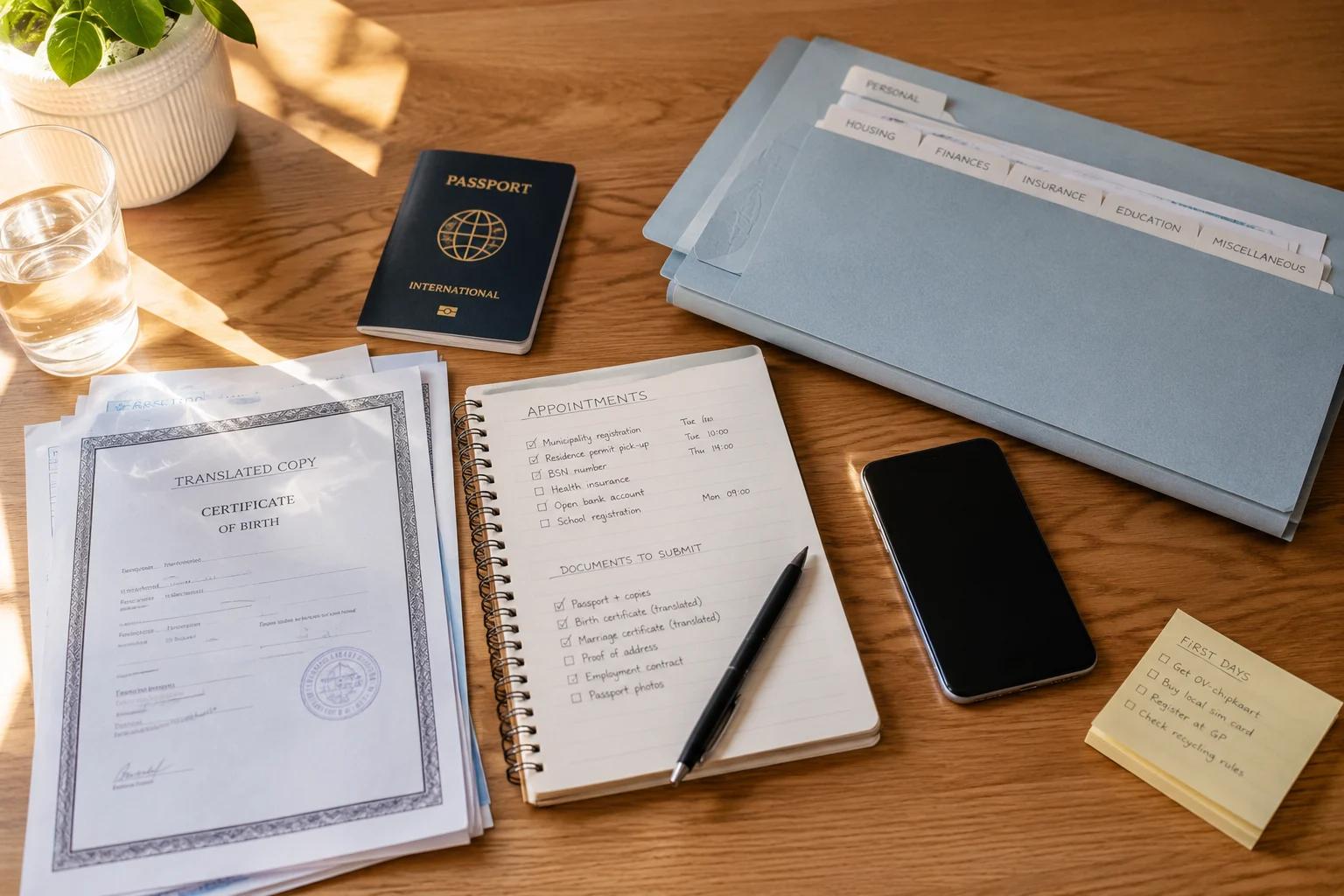
If you will live in the Netherlands for more than 4 months, you usually need to register as a resident with the municipality. Government.nl states that you must do this within 5 days of arriving in the Netherlands and that you will receive a BSN when you register.
Official source:
- When should I register with the Personal Records Database as a resident?
- What do I need to arrange if I'm moving to the Netherlands?
Your BSN is essential. You will need it for many day-to-day and official tasks, such as dealing with government services, taxes, healthcare, and often banking or employment administration.
If you will stay in the Netherlands for less than 4 months, your path may be different. In that case, you may need to register as a non-resident in the RNI instead of registering as a resident. Always check your situation before making assumptions.
What to take to your registration appointment
Bring the documents your municipality asks for. These often include:
- your passport or national ID
- proof of address or housing details
- civil status documents if relevant
- residence-related documents if applicable
Some municipalities may ask for additional proof depending on your nationality or family situation, so it is smart to verify the local checklist in advance.
Your first weeks: set up the basics that make daily life easier
Once registration is done, focus on the practical systems that help you live and work normally.
1. Apply for DigiD
DigiD is your digital login for many Dutch government services. Government.nl describes it as the system used in dealings with public bodies such as the Tax and Customs Administration.
You may need DigiD for tasks related to:
- taxes
- municipal services
- benefits and allowances
- health-related administration
Apply for DigiD through the official channel:
2. Check your health insurance obligations
Government.nl explains that everyone who lives in the Netherlands must have health insurance with a Dutch insurer. Because individual situations can differ, especially in the first weeks after arrival, it is wise to check your exact obligations quickly rather than waiting.
Official source:
3. Open a Dutch bank account
Many employers, landlords, and service providers expect you to have a Dutch bank account. In practice, this becomes much easier after you have completed registration and received your BSN.
4. Find a family doctor
You are not always legally required to register with a family doctor immediately, but Government.nl notes that it is a good idea to do so. That way, you are prepared if you need care.
5. Learn how taxes and allowances work
Newcomers are often surprised by how many practical questions connect back to tax administration. Government.nl notes that you may also be entitled to benefits such as healthcare benefit, housing benefit, or childcare-related support depending on your income and household situation.
This is one area where it helps to stay organized from the start.
Work and daily life basics you should not ignore
Settling in is not only about official registration. It is also about avoiding costly misunderstandings in everyday life.
Understand your employment contract
Before or shortly after starting work, read your contract carefully. Check:
- working hours
- salary
- probation period
- notice period
- transport or housing deductions
- whether you are employed directly or through an agency
Keep your payslips
Your payslip helps you understand your gross pay, net pay, deductions, and other important details. It is one of the simplest documents to save consistently, and one of the most useful later.
Learn the difference between official information and social media advice
One reason WelkomNL exists is that newcomers often receive conflicting advice from friends, WhatsApp groups, and social posts. Some of that advice is helpful. Some of it is outdated. Some of it is simply wrong.
Whenever the issue affects your residence status, work rights, taxes, registration, or benefits, always verify the final answer through an official source.
Common mistakes newcomers make
Here are the mistakes that cause the most avoidable problems:
- waiting too long to book a municipality appointment
- arriving without original legalized or translated documents
- assuming the same rules apply to every nationality
- signing a work or housing document without fully understanding it
- delaying health insurance research
- not saving digital copies of important paperwork
- depending only on informal advice instead of checking official guidance
A smooth arrival usually does not come from luck. It comes from preparation.
How WelkomNL can help after you arrive
WelkomNL is designed to make the first months in the Netherlands feel less fragmented and less overwhelming.
Inside the app, users can access:
- newcomer guidance in multiple languages
- practical articles and official-source links
- a personal timeline for important next steps
- job search support
- a Dutch CV builder
- document and letter scanning tools for understanding paperwork faster
If you are planning your next steps after arrival, a helpful next read is:
- How to Find a Job in the Netherlands as an International
- How to Create a Dutch CV That Gets Interviews in the Netherlands
Final thoughts
The best moving to the Netherlands checklist is not the longest one. It is the one that helps you do the right things in the right order.
Focus on your legal status, registration, BSN, DigiD, insurance, and work basics first. Once those foundations are in place, the rest of daily life becomes much easier to manage.
And if you want a more guided path from arrival to belonging, WelkomNL can help you keep everything clear in one place.
FAQ
Do I need to register with a municipality when I move to the Netherlands?
If you will live in the Netherlands for more than 4 months, you generally need to register with the municipality where you live. Government.nl says this should usually happen within 5 days of arrival.
What is a BSN and why is it important?
A BSN is your citizen service number. You need it for many official and practical matters, including communication with the government, taxes, and healthcare.
What if I stay in the Netherlands for less than 4 months?
You may need RNI registration instead of resident registration. Check the official rules for your specific situation before you travel.
What should I arrange first after arrival?
For most newcomers, the first priorities are municipal registration, BSN, DigiD, health insurance review, and basic work or banking setup.
Next step
Put this guidance into action inside the WelkomNL app
Keep your momentum going with the WelkomNL app and move from reading advice to taking practical action in one place.
The app is built to help newcomers in the Netherlands navigate jobs, local systems, and day-to-day next steps with more clarity.
Continue reading
Related articles
Bringing or Buying a Car in the Netherlands: Registration and Tax Guide 2026
Understand how to register a car in the Netherlands in 2026, including RDW registration, BPM, road tax rates for petrol, hybrid and electric cars, and insurance.

Setting Up Utilities in the Netherlands: Energy, Water and Internet in 2026
Set up gas, electricity, water and internet in your new Dutch home. Compare fixed and variable energy contracts, meter readings, providers and moving-in timing for 2026.

Parental Leave and Child Benefits in the Netherlands: 2026 Guide for Families
Understand Dutch maternity, partner and parental leave rules for 2026, how UWV payments work, and how kinderbijslag child benefit is calculated and paid.