
WelkomNL Blog
Waste and Recycling in the Netherlands: A Practical Guide for Newcomers
Learn how to find your local waste rules, sort common household items, handle bulky rubbish and understand collection terms without guessing from bin colours.
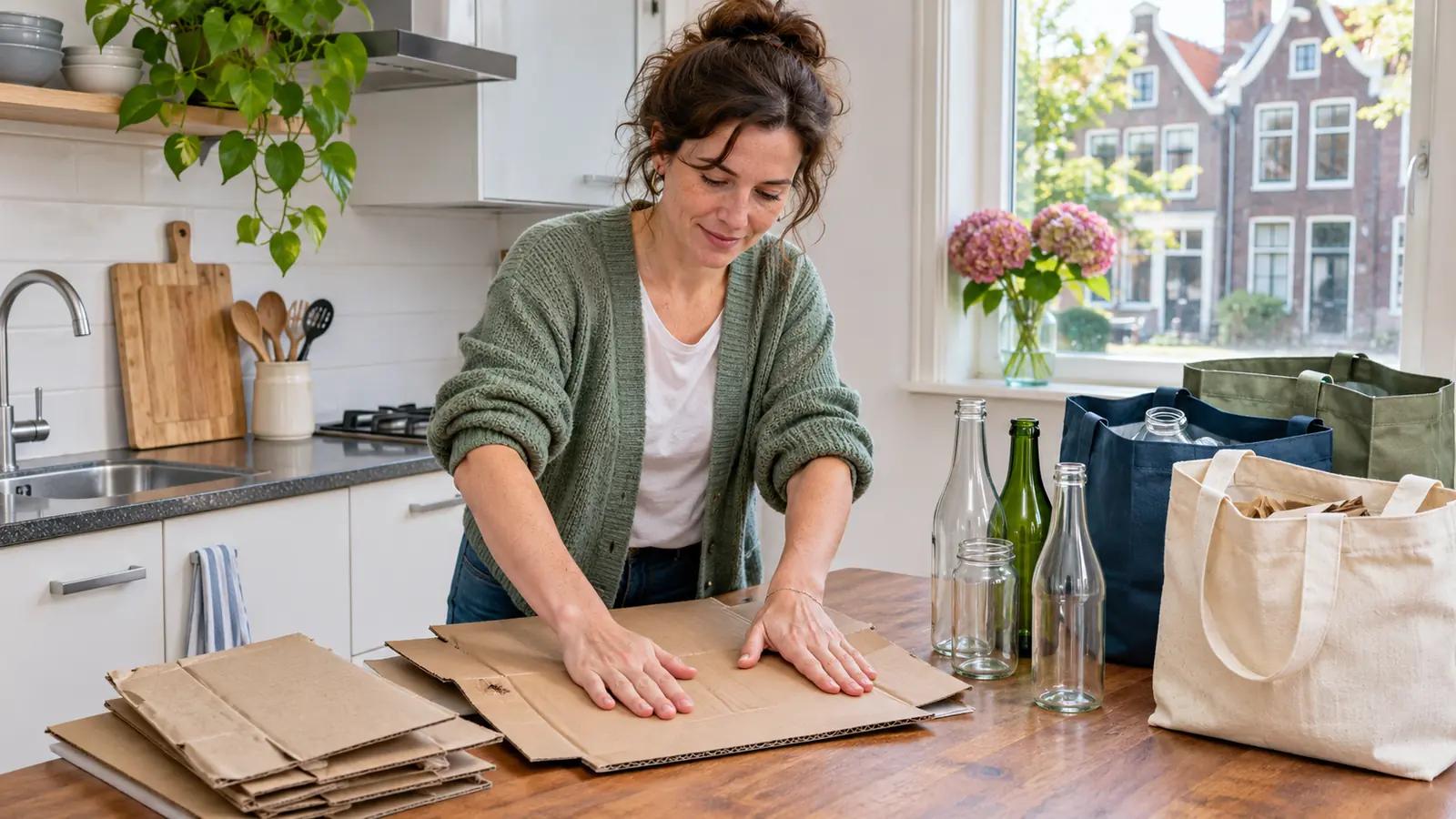
You have unpacked, cooked your first meal and now face a pile of cardboard, bottles and packaging. The easiest mistake is following a rule remembered from another city. Dutch household waste arrangements depend on your address, so the right starting point is your municipality or its collection company.
This guide gives you a method for finding the correct local answer and organising your home around it. It does not assume that one bin colour, collection day or plastic-sorting system applies across the Netherlands.
Look up your address before sorting by colour
Search the official municipal website for afval, afvalwijzer or afvalkalender, then enter your postcode and house number where requested. Check whether your building uses shared underground containers, individual bins or bags collected at fixed times. A neighbour can explain the routine, but the official address guide should settle unclear instructions.
Save the collection schedule and check public-holiday changes. Find out whether you need an access card and how to replace it if it is missing. When moving, ask the landlord or previous occupant about the card, but confirm whether it belongs to the property and which containers it opens.
Learn the words you will actually see
- Restafval or huisvuil: residual household waste.
- Papier en karton: paper and cardboard.
- Glas: glass; follow the local instructions for accepted container glass.
- GFT: vegetable, fruit and garden waste; food-waste arrangements vary by address.
- Grof afval: bulky waste, such as furniture.
- Ophaaldag: collection day; op afspraak: by appointment.
PMD commonly refers to plastic packaging, metal packaging and drink cartons. Whether residents separate these at home depends on the local system. Some areas sort relevant packaging after collection. Do not add a separate plastic bag to the street because another municipality uses one.
Create a small sorting station at home
Start with the waste streams your address actually collects. Use compact bags or boxes where space is limited and keep the local guide nearby. Flatten cardboard so it fits the intended container, and keep paper dry. Check contaminated packaging in the sorting guide rather than assuming anything made partly from paper belongs with clean cardboard.
A useful household agreement is to leave unfamiliar items in one small checking box until someone looks them up. This is easier than repeatedly removing the wrong material from a full bin. Keep any sharp or hazardous item safely out of reach while checking its route.
Separate deposit returns from ordinary recycling
Some drink containers carry statiegeld, a refundable deposit. Check the label and the retailer’s return instructions before putting them in a recycling stream. Keep eligible containers intact enough for the return system to recognise them and follow the machine’s instructions.
Not every bottle or can is accepted by every return point. If the machine rejects an item, inspect its label and use the correct alternative route. Do not leave rejected containers around the machine. A separate small return bag makes this an easy addition to a regular grocery trip.
Furniture, electronics and hazardous items need planning
Check whether bulky items require a collection appointment, a designated day or delivery to a municipal recycling centre. Look up access requirements and opening hours before hiring a van. Amsterdam, for example, provides an address-based Waste Guide; its procedures illustrate why a nationwide guess is unreliable.
Check specific instructions for batteries, electrical appliances, paint, chemicals and medicines. Do not place loose batteries in an ordinary recycling bag or pour chemicals into a drain. Retailers, pharmacies or municipal facilities may provide relevant collection routes, but confirm what each location accepts.
A full container is not permission to leave a bag beside it
Use the municipality’s reporting route for a broken or full container and follow its advice for alternatives. Leaving waste outside the permitted place or time can lead to enforcement. Take it home temporarily if you cannot find an authorised option rather than adding to a pile.
Check the actual local charges as well. Waste-collection tax and any pay-per-disposal arrangements depend on the municipality and household situation. Do not assume a fee quoted for another city applies to your apartment.
Your first-week recycling checklist
- Find the official address guide and identify your collection system.
- Locate containers, access-card instructions and bulky-waste procedures.
- Set up only the sorting streams your home needs.
- Save reminders for collection days and deposit returns.
- Recheck the rules whenever you change address.
Use WelkomNL to keep local practical tasks alongside your registration, utilities and housing checklist. Once the correct local routine is saved, recycling becomes a small repeatable habit rather than a new research project every week.
Related WelkomNL guide
Changing your address in the Netherlands
Official sources and further reading
Government.nl: Local environmental responsibilities
Amsterdam: Address-based Waste Guide
Amsterdam: Sorting household waste
Next step
Put this guidance into action inside the WelkomNL app
Keep your momentum going with the WelkomNL app and move from reading advice to taking practical action in one place.
The app is built to help newcomers in the Netherlands navigate jobs, local systems, and day-to-day next steps with more clarity.
Continue reading
Related articles

Orientation Year in the Netherlands: A Practical Zoekjaar Guide for Graduates
Explore the Dutch orientation year after graduation: check your route, organise documents, understand work permissions and plan your job search before the permit expires.
Municipal and Water Board Taxes in the Netherlands: Understanding Your Bills
Received an unfamiliar Dutch tax bill? Learn how municipal charges, water board taxes and drinking-water bills differ, what tenants should check and where to ask for help.

Dentists in the Netherlands: Finding Care, Costs and Insurance Explained
Find a dentist in the Netherlands, prepare for your first appointment, understand treatment estimates and check what basic or supplementary insurance actually covers.