
WelkomNL Blog
Cycling in the Netherlands: A Beginner’s Guide to Safe Everyday Riding
Build confidence on Dutch cycle paths with practical advice on choosing a bicycle, lights, junctions, wet weather, parking, theft prevention and your first commute.
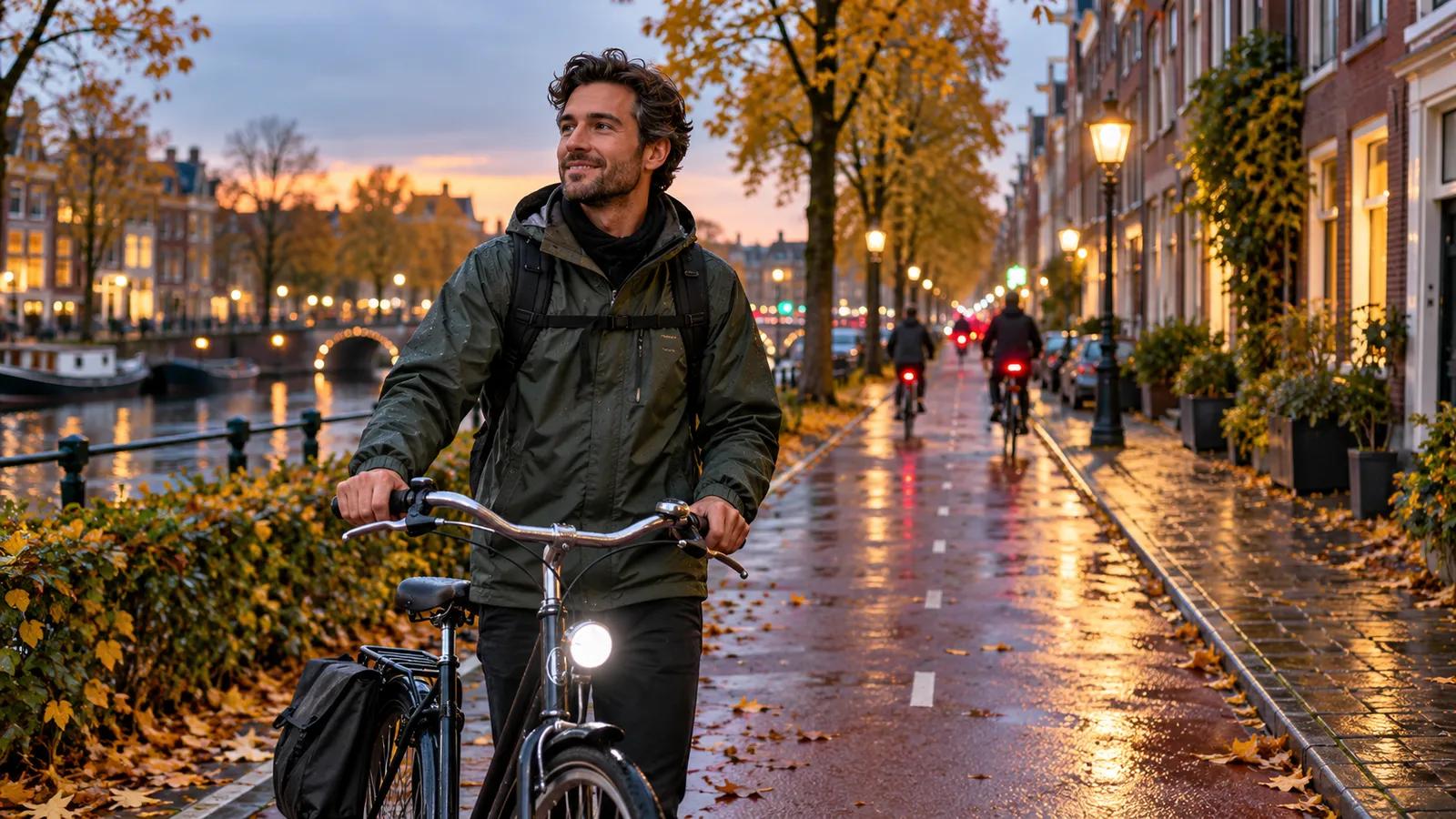
Cycling makes Dutch daily life feel more local: a short ride can connect your home, station, supermarket and friends. But a well-designed cycle network still requires practice, especially if you are new to busy junctions, tram rails or riding after dark.
Start with a bicycle you can control easily, a quiet practice route and a few reliable habits. This guide is for ordinary everyday bicycles; speed pedelecs and other powered vehicles can have different rules.
Choose control over appearance
Test whether you can start, brake, look over your shoulder and put a foot down comfortably. A heavy city bike may feel reassuring but difficult to carry upstairs. A light bicycle can be easier to handle yet need more attention when locked outdoors. Try the actual model before committing.
Check frame size, brakes, tyres, chain, bell, steering and lights. If buying used, ask for a receipt and a clear explanation of ownership. A very cheap bike with an altered frame number or an implausible story deserves caution. Budget for a service and locks as part of the purchase.
Make yourself visible before autumn evenings
Dutch government traffic guidance requires a working front light showing white or yellow and a red rear light in darkness and poor visibility. Check them before leaving, not when you reach an unlit path. Reflectors and other equipment requirements also matter; have a bicycle shop check an unfamiliar bike.
Aim lights so you can be seen without dazzling other riders. Carry spare batteries or charge detachable lights on a routine. A reflective jacket can help other road users notice you, but it does not replace legally required lighting.
Learn junctions slowly
Ride on the right and pass with space on the left. Follow cycle-path signs, markings, traffic lights and priority instructions. Never assume that a bicycle always has priority: the design and signs at a junction determine who should yield.
As a beginner, reduce speed early at crossings and roundabouts. Watch for turning vehicles, pedestrians and cyclists approaching faster than expected. If a complicated turn feels unsafe, stop somewhere suitable, dismount and use the appropriate crossing as a pedestrian. Confidence grows faster when you can choose an easier option.
Keep attention available for traffic
Set navigation before departure and stop in a safe place to change the route. Do not hold a phone while riding. Keep bags away from wheels and handlebars, avoid sudden swerves and signal a turn when safe. Look behind before changing position, especially when passing a parked delivery vehicle.
Tram rails can catch a narrow tyre. Approach them at a safer angle when the traffic situation permits, and slow down before the crossing rather than braking hard on metal. Give opening car doors a wide berth and expect pedestrians near shops to step into your path.
Rain, wind and darkness change the journey
Allow more stopping distance on wet surfaces. Leaves, painted markings and metal covers can be slippery. Strong side winds can move you unexpectedly, particularly beside open water or when a large vehicle passes. A familiar route in daylight may feel very different during an evening storm.
- Use practical waterproof clothing that does not obstruct your view or movement.
- Keep luggage balanced and secure rather than hanging shopping bags from the bars.
- Choose public transport when weather exceeds your comfort or ability.
- Allow extra time so you do not need to race for the train.
Park legally and reduce theft risk
Use marked parking or a designated bicycle facility and read local signs about maximum parking duration. Near major stations, incorrectly parked bicycles may be removed. Photograph the location or save the parking section so you can find the bike among hundreds of similar models.
Use a good lock and, where permitted, a second lock securing the frame to a fixed point. Record the frame number, make, colour and purchase details. If the bicycle disappears, first check whether the municipality removed it before assuming theft. Report suspected theft through the police’s appropriate channel.
Plan your first commute as a rehearsal
- Ride the route on a quiet day before trying it in rush hour.
- Identify difficult junctions and choose a calmer alternative if needed.
- Find the correct station entrance and lawful bicycle parking.
- Check lights, brakes and tyres before your first workday.
- Keep a backup public-transport route for bad weather or a puncture.
Use WelkomNL to connect cycling with your wider travel routine and newcomer checklist. A comfortable bicycle, working lights and a familiar route are a stronger foundation than trying to copy the speed of experienced commuters.
Related WelkomNL guide
Dutch public transport and OVpay
Official sources
Next step
Put this guidance into action inside the WelkomNL app
Keep your momentum going with the WelkomNL app and move from reading advice to taking practical action in one place.
The app is built to help newcomers in the Netherlands navigate jobs, local systems, and day-to-day next steps with more clarity.
Continue reading
Related articles

Foreign Diploma Recognition in the Netherlands: A Guide for Job Seekers
Find the right route for your foreign diploma: understand IDW evaluation, regulated professions, translations and how to explain your qualifications to Dutch employers.

Changing Your Address in the Netherlands: A Moving Checklist for Expats
Moving within the Netherlands? Follow a practical checklist for municipality registration, documents, utilities, healthcare, mail and the organisations you need to notify.

Unemployment Benefit in the Netherlands: A Practical WW Guide for Expats
Lost your Dutch job? Learn how to organise a WW application, check the UWV eligibility rules, prepare documents and protect your residence plans while searching for work.