
WelkomNL Blog
Moving to the Netherlands With a Dog or Cat: Pet Relocation Guide 2026
Plan a safe pet move to the Netherlands with clear guidance on microchips, rabies vaccination, EU pet passports, health certificates, blood tests, travel, housing and registration.
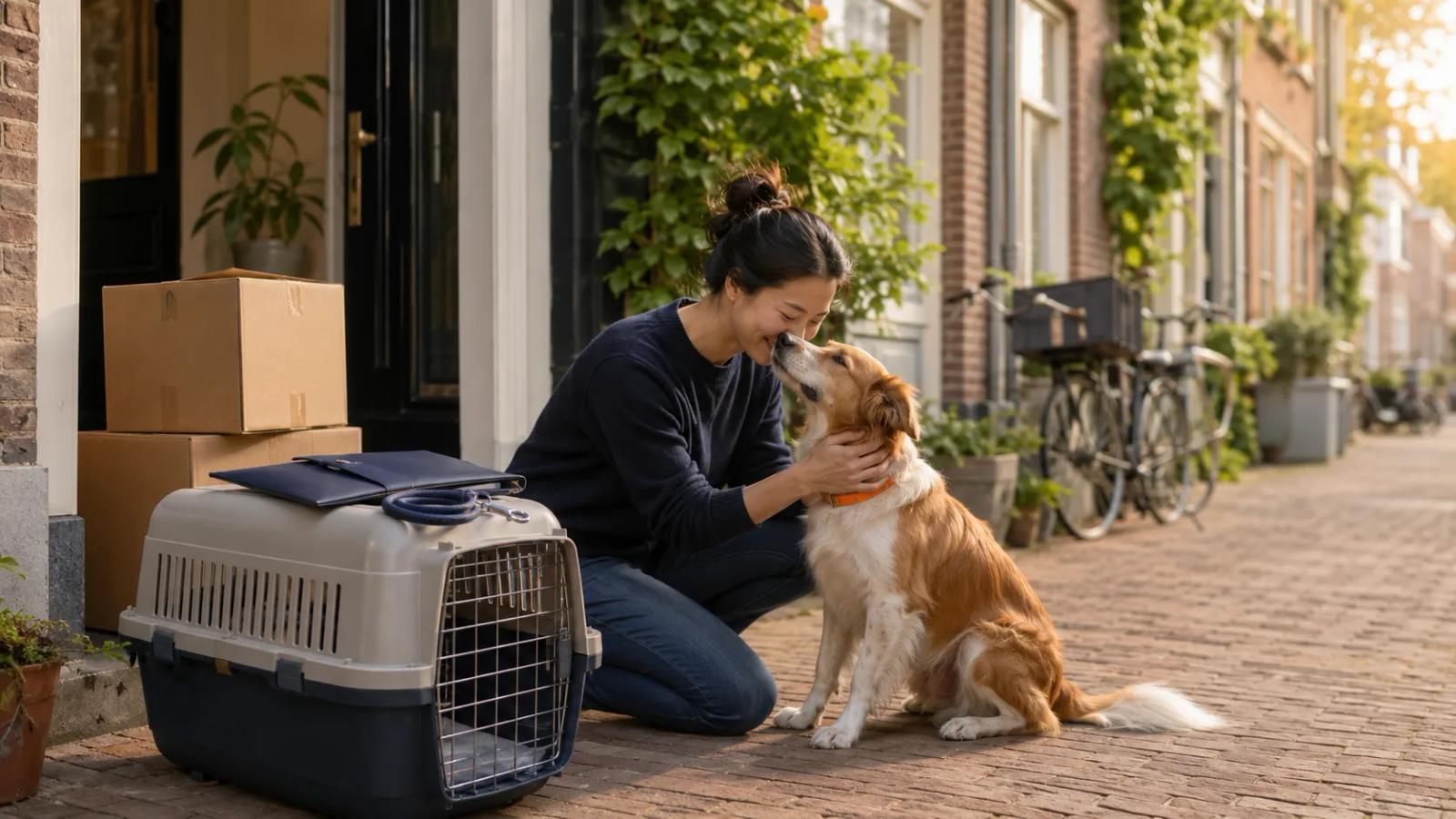
Moving with a dog or cat requires more lead time than booking a flight. The order of the microchip and rabies vaccination matters, some countries require a rabies antibody blood test and a waiting period, and airline rules are separate from Dutch entry rules.
Start with the NVWA route for the country your pet travels from. A pet’s nationality is not relevant; the departure country and travel history determine the health requirements.
Is the Move Non-Commercial?
Standard pet-travel rules apply when the move is genuinely non-commercial, the animal is not being sold or transferred, and the owner’s travel is connected to the pet’s journey. If someone else accompanies the animal, or the journeys are separated, documentation and timing conditions apply. More than five pets normally triggers different rules unless a specific competition or event exception is met.
Moving From Another EU Country
For dogs and cats arriving from another EU member state, the central requirements are an approved identity method, a valid EU pet passport, and a valid rabies vaccination. The microchip must be inserted or read before—or on the same date as—the first recorded rabies vaccination.
A primary rabies vaccination can be given from twelve weeks of age and must generally be at least 21 days old before travel. This means very young puppies and kittens cannot simply enter before the waiting period is complete.
Moving From Outside the EU
The route depends on whether the departure country is treated as lower or higher rabies risk. Requirements can include a microchip, rabies vaccination, official EU animal health certificate, owner declaration, and entry through a designated travellers’ point of entry.
For certain higher-risk countries, a rabies antibody titration test is required. NVWA guidance explains that the blood sample follows vaccination and a further waiting period applies before entry. This can turn preparation into a process of several months, so confirm the exact route before buying non-refundable travel.
The Correct Order of Preparation
- Confirm the departure-country route and whether any transit country changes it.
- Have an ISO-compatible microchip implanted or verified.
- Vaccinate against rabies after the chip is in place and record both accurately.
- Complete a blood test and waiting period if your route requires them.
- Obtain the correct pet passport or official health certificate within its validity window.
- Book an approved route, carrier, crate, and entry point.
- Carry originals and accessible digital copies during travel.
Airline and Transport Rules Are Separate
An airline can impose stricter age, breed, crate, temperature, or route conditions than the entry authority. Ask whether the pet travels in the cabin, hold, or as manifest cargo; which crate standard applies; and where check-in and collection occur. Never sedate an animal without specific veterinary advice.
Find Pet-Friendly Housing Before Arrival
A legally permitted pet can still be restricted by a rental agreement or building rules. Ask the landlord in writing before signing and describe the number, size, and type of animals. Check access to outdoor space, stairs or lifts, nearby walking areas, and noise expectations.
Your First Weeks in the Netherlands
- Register with a local veterinarian before an urgent problem occurs.
- Ask the vet to verify the chip number and records after arrival.
- For a dog, check municipal dog-tax rules; some municipalities charge it and others do not.
- Arrange liability and pet-health cover according to your risk preference.
- Learn local leash, waste, nature-area, and public-transport rules.
- Update the appropriate pet database with current contact details where applicable.
Common Relocation Mistakes
- Vaccinating before microchipping and assuming the vaccination remains valid for travel.
- Using a normal vaccination booklet when an EU passport or official certificate is required.
- Counting the 21-day waiting period incorrectly after a first rabies vaccination.
- Ignoring a transit country’s rules or designated entry point.
- Assuming an airline booking confirms compliance with border-health rules.
Build the timeline from the pet-entry rules backward, then book the journey.
Official Sources and Further Reading
NVWA: Travelling from EU countries with a dog or cat
NVWA: Travelling from third countries with a dog or cat
Make the Whole Move Easier With WelkomNL
WelkomNL keeps your human settling-in tasks organised while you coordinate veterinary and transport requirements with the official authorities. Build one arrival checklist for registration, housing, healthcare, banking, work, and the practical needs of your pet.
Next step
Put this guidance into action inside the WelkomNL app
Keep your momentum going with the WelkomNL app and move from reading advice to taking practical action in one place.
The app is built to help newcomers in the Netherlands navigate jobs, local systems, and day-to-day next steps with more clarity.
Continue reading
Related articles
Bringing or Buying a Car in the Netherlands: Registration and Tax Guide 2026
Understand how to register a car in the Netherlands in 2026, including RDW registration, BPM, road tax rates for petrol, hybrid and electric cars, and insurance.

Setting Up Utilities in the Netherlands: Energy, Water and Internet in 2026
Set up gas, electricity, water and internet in your new Dutch home. Compare fixed and variable energy contracts, meter readings, providers and moving-in timing for 2026.

Parental Leave and Child Benefits in the Netherlands: 2026 Guide for Families
Understand Dutch maternity, partner and parental leave rules for 2026, how UWV payments work, and how kinderbijslag child benefit is calculated and paid.